Energy, from vessel to pump.
MEA Energy Trading is an integrated downstream energy platform in Nigeria. We manage import, storage, haulage, wholesale and commercial supply, operate a network of 43 retail stations (26 active, 17 in development) across all six geopolitical zones, and deliver fuel the last mile to our customers. With every link in the chain in our hands, we bring product from cargo to customer without unnecessary intermediaries.
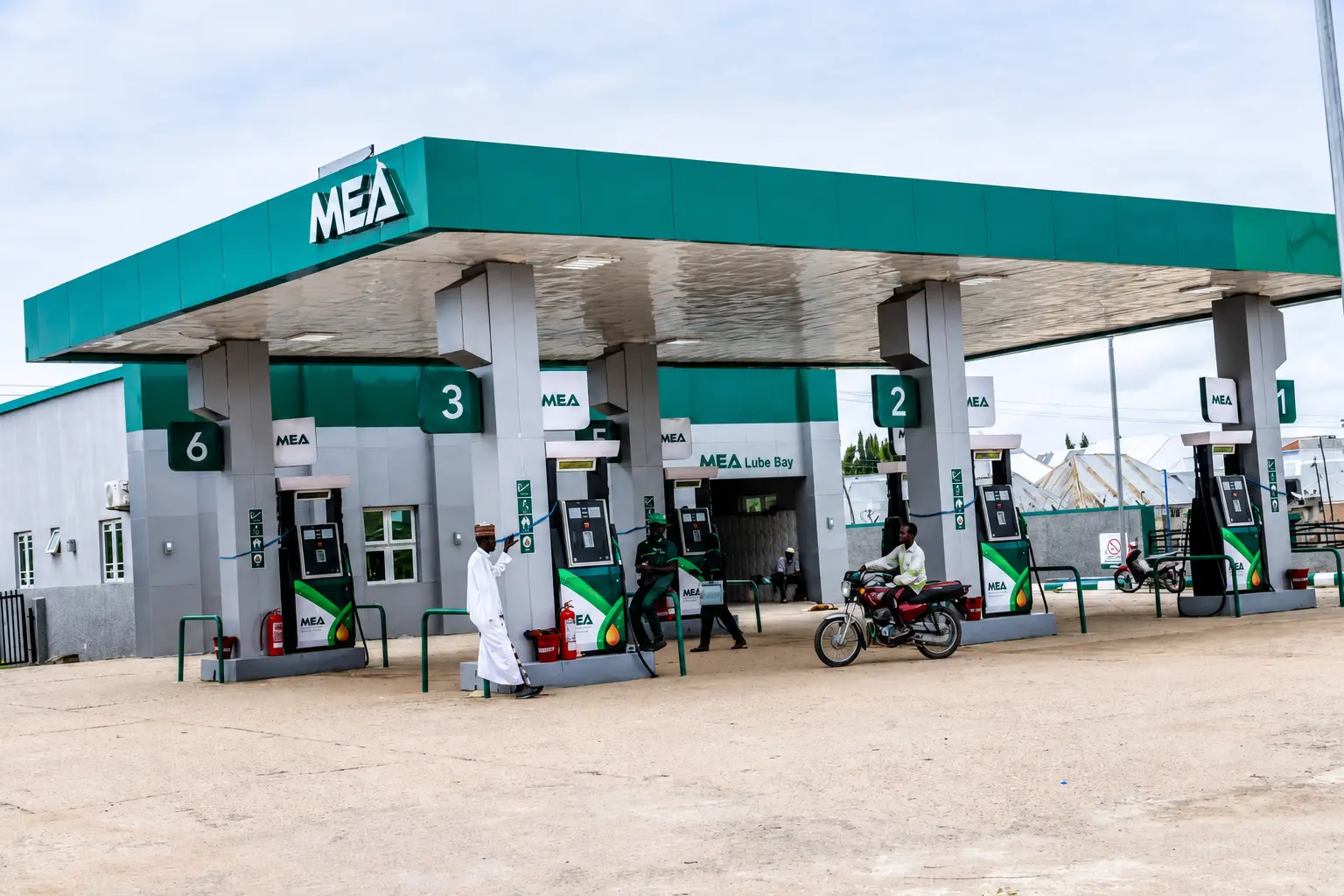
- Stations: 26 active, 17 in development
- 43
- Trucks by end-December 2026
- 289
- Signed stations by end-December 2026 (target)
- 70
- People at MEA Nigeria
- 413
Our network and our fleet.
Stations, today and within three years.
- 43
- Today: 26 active, 17 in development
- 70
- Target: signed by end-December 2026
- up to 200
- Within three years, by 2029
MEA figures, October 2026
Trucks, from 500 to 50,000 litres.
- 289
- Fleet by end-December 2026
- 500
- Target by end-2027
MEA figures, October 2026
What Nigeria uses, makes, imports and sells abroad.
Nigeria: what the country uses
Liquid fuels, million litres a day, April 2026 (NMDPRA). LPG is shown in tonnes below.
- Petrol: 51
- Diesel: 17
- Jet fuel: 3
- Lubricants and base Oil: 1.6
NMDPRA, April 2026
Nigeria: cooking Gas (LPG)
Tonnes a day, December 2025 (NMDPRA).
- Used in Nigeria: 4,380
- Supplied from Nigerian plants: 3,700
- Imported: 1,500
NMDPRA fact sheet, January 2026. Total supply averaged 5,200 tonnes a day, a record
Nigeria: other products
Tonnes a year.
- Cooking Gas (LPG): ~1.6 million
- Lubricants: 585,000
- Bitumen: ~300,000
NMDPRA (LPG, our calculation); Kline & Co (lubricants); local suppliers via Argus (bitumen)
Nigeria: petrol supply
Million litres a day, August 2026 (NMDPRA).
- Made by Dangote, sold at home: 35.9
- Imported: 14.6
- Exported by Dangote: 9.7
NMDPRA, via Nairametrics, 24 September 2026
Nigeria: diesel supply
Million litres a day, August 2026 (NMDPRA).
- Made by Dangote, sold at home: 12.4
- Imported: 1.3
- Exported by Dangote: 8.8
NMDPRA, via Nairametrics, 24 September 2026
Nigeria: Gas
Billion cubic feet a day, 2025 (NUPRC).
- Produced: ~7.4
- Exported, mostly LNG: ~2.6
- Supplied to the home market: ~2.1
NUPRC, via Shipping Position. Per-day figures are annual totals divided by 365
Nigeria: crude Oil
Million barrels a day (OPEC).
- 2024 average: 1.35
- 2025 average: 1.43
- September 2026: 1.53
OPEC Monthly Oil Market Report, via Nairametrics
Petrol and diesel make up most of what Nigeria uses.
| Petrol | 51 million litres |
| Diesel | 17 million litres |
| Jet fuel | 3 million litres |
| Lubricants and base Oil | 1.6 million litres |
| LPG (cooking Gas) | 4,380 tonnes |
NMDPRA, April 2026 (liquid fuels) and December 2025 (LPG).
- 15 bcf/d
- Gas demand expected by 2030, against ~7.4 produced in 2025
- 71%
- Of petrol receipts supplied by Dangote in August 2026 (our calculation)
- ~10%
- Of diesel receipts that was imported in August 2026 (our calculation)
- 22 to 30 mtpa
- NLNG capacity, with Train 7 first cargo forecast for 2027
- ~1.6 million t
- Cooking Gas (LPG) used a year: 4,380 tonnes a day (our calculation)
Nigeria both imports and exports petroleum products, and it still imports ~29% of the cooking gas it supplies. It also burns fuel oil and kerosene, and it relies on imported base oil to blend its lubricants. Bitumen demand is expected to reach 400,000 to 450,000 tonnes a year. MEA trades all of these products.
Same-day dispatch, tracked trucks.
MEA runs its own trucks, from 500 to 50,000 litres, so we can supply any volume without leaning on third-party transport. The fleet will reach 289 trucks by the end of December 2026, with a target of over 500 by end-2027. It includes diesel, CNG and LNG truck heads and LPG trailers.
Fuel delivered to your door.
Fuel delivered to your door.
Order petrol, diesel or cooking gas in the app, and it arrives at your home, your office or your site.
Gas and new energy
MEA Gas is building LNG, CNG and LPG supply for customers beyond the grid. At our stations, EV charging, power-as-a-service and L-CNG skids are starting to roll out.
Technology that keeps the pumps running.
We believe in what artificial intelligence can do for energy: forecasting demand, spotting losses, planning routes, keeping equipment safe and serving customers faster. We want to be the most advanced downstream company in the industry, driven by data, and we use technology to make every link in the chain work harder.
Data-driven stations, with tank and pump sensors, loyalty and in-app payment, and vision analytics.
Tracked trucks, with GPS, cameras, compartment sensors and smart locks.
Data from stations, trucks and trading helps us forecast demand, plan deliveries and cut losses.
The most dynamic energy Group, creating enduring value across generations.
We want to be the most dynamic energy Group, creating enduring value across generations. Our mission is to deliver what the world depends on, through innovation and operational excellence. In Nigeria, that means owning more of the chain from vessel to pump, and building it to last.
Stations
43 in total (26 active, 17 in development), a target of 70 signed by end-December 2026 and up to 200 within three years, by 2029.
Assets
We plan our own storage and an LPG terminal, because we mean to be more than a trading house.
Fleet
289 trucks by end-December 2026 and over 500 by end-2027.
Technology
Data-driven stations, tracked trucks and analytics that help every link in the chain work harder.
Every stage of energy
We are downstream today, with midstream Gas and upstream under way.
L.E.A.P: how we work.
Four values guide every decision we make, from the boardroom to the forecourt.
Leadership
We set the direction, take the first step and lead by example.
Excellence
We hold ourselves to the highest standard in everything we deliver.
Accountability
We own our promises and we own our results.
Partnership
We grow together with our customers, suppliers, communities and each other, and we are stronger for it.
One name. One brand.
Effective 9 October 2026, Bell Weather International FZC has changed its name to MEA Global Trading FZC. Only the name has changed, not the ownership: same company, same leadership, led from Dubai.
Until 8 October 2026
Bell Weather International FZC
From 9 October 2026
MEA Global Trading FZC
What one name gives us
One name now stands behind every company and every department in the Group. That means the parent company, MEA Energy Trading, MEA Energy Niger, MEA Gas, MEA Logistics and Transportation, Go N' Fill, Agricliq and the teams that support them.
Better brand recognition
Put one name on every station, truck, contract and cargo, and people spot it sooner and remember it longer.
One household name
A single name that motorists, families, farmers and businesses across West Africa come to know and trust, from the forecourt to the delivery truck.
One industry name
Banks, suppliers, national Oil companies and trading houses see one identity in the Oil, Gas and commodities industry: one Group, one track record, one standard.
Clearer for partners
Trading, retail, logistics, Gas and delivery now sit under one recognisable name, so nobody has to work out which entity does what.
A shared reputation
Every station opened, cargo delivered and project completed builds the same brand. What we earn in one business strengthens all the others.
One team, one culture
One name behind every department brings teams in Dubai, Nigeria and Niger together around the same values: Leadership, Excellence, Accountability and Partnership.
Contracts, bank details and obligations continue unchanged under the new name. Updated documents are available from the Group office.
Join MEA.
“We, as Africans, must stop taking our money abroad.”