
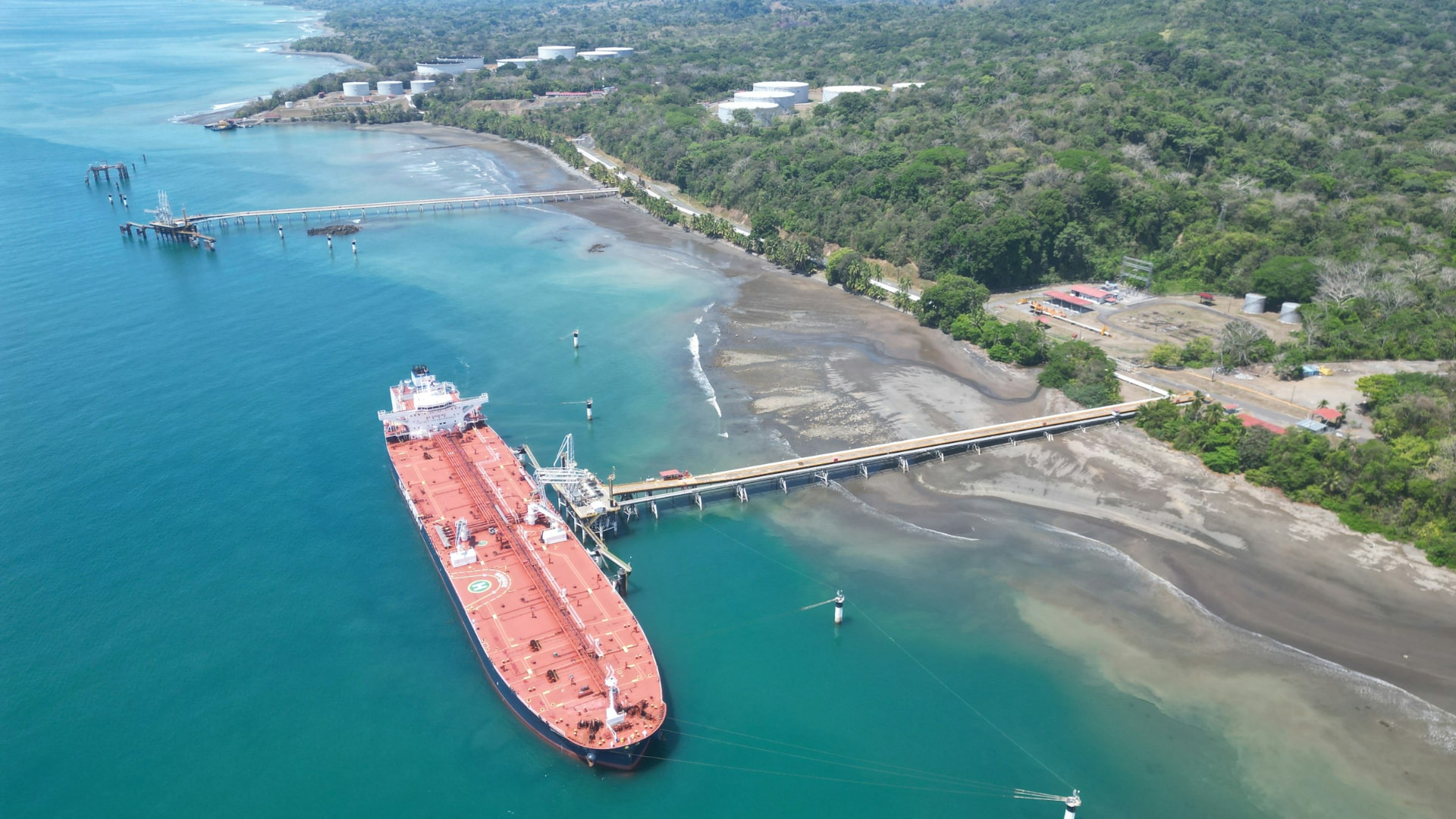
Reliable supply, from the Gulf to Africa.
We trade refined petroleum products physically, and we back every deal in-house with supply origination, shipping and logistics.
The Iran war showed the world what happens when the flow stops.
When the conflict involving Iran began on 28 February 2026 and traffic through the Strait of Hormuz was disrupted, the effect was felt far beyond energy markets. About a fifth of the world's Oil and LNG normally passes through that one strait. Within days crude was above USD 100 a barrel for the first time in four years, and the prices of fertiliser, diesel and petrol followed.
- ~20%
- Of world Oil and LNG exports pass through Hormuz
- USD 100+
- Crude price on 9 March 2026, first time in four years
- +26%
- Global urea price in two weeks, from USD 465 to 585 a tonne
- +24%
- US diesel price since the war began
Nothing works without Oil and Gas. The supply chain runs on them from the smallest workshop to the largest food company:
The farm and the food on your table
Natural Gas is the raw material for nitrogen fertiliser. When Gas and fertiliser exports were disrupted, urea jumped, and farmers faced higher costs just as planting started. Then there is the work itself: tractors, harvesters, irrigation pumps and the trucks that carry the grain all run on diesel.
The small business
A bakery, a laundry or a workshop in Lagos or Niamey runs on diesel generators and LPG, and delivers on diesel trucks. When fuel costs jump or supply stops, the oven, the machine and the delivery van all stop with it.
Food factories and cold chains
Processing plants, grain mills and cold stores use Gas and diesel for heat, power and refrigeration. And every pack of food still reaches the shop by truck.
Transport and airlines
Trucks, ships, buses and planes run almost entirely on petroleum products. Higher diesel and jet prices pass straight into the cost of everything that is moved.
Power, hospitals and homes
Hospitals, banks, telecom towers and homes rely on Gas and diesel for electricity, and LPG for cooking. Where the grid is weak, backup generators are the grid.
Plastics, packaging and medicines
Plastic bottles, food packaging, medical equipment and many medicines start as petrochemicals made from Oil and Gas.
The lesson is security and reliability. The countries and companies that keep working are the ones that can source from several hubs, store fuel close to the customer and move it with their own fleet. That is how MEA is built: trading hubs in the UAE, Nigeria, Niger, Ghana and Togo, our own trucks, and a vision of storage tanks and stations across Africa.
What passes through our desk.
What we trade
Tonnes a month, across markets; any parcel from 1,000 to 100,000 MT.
- Monthly volume, approx: 200,000 MT
MEA figures
- ~200,000
- Tonnes traded a month
- 1,000 to 100,000 MT
- Any volume we trade
- 11
- Hubs in five countries
- 5
- Nigerian coastal hubs
What we do
Our core business is the physical trading and supply of all refined petroleum products and petrochemicals. Every deal is backed in-house by supply origination, shipping and integrated logistics, so we manage the flow of product from source to final delivery. We trade approximately 200,000 metric tonnes a month across markets, and we trade any volume from 1,000 MT to 100,000 MT.
Diesel
(AGO)A core product, powering wholesale, industrial, transport and retail markets.
Gasoline
(PMS)Core product for wholesale and retail.
LPG
For industrial, commercial and household use.
Jet fuel
(ATK / Jet A-1)For distributors and end-users, supplied to airports in Nigeria and open to working with airports anywhere.
And all other refined products
Including naphtha, fuel Oil, base Oil and petrochemicals.
Eleven hubs across five countries.
Swipe sideways to see the full table.
| Nigeria | LagosKokoWarriPort HarcourtCalabar | Supply points on the coast, with product bought from the Dangote Refinery, which we work closely with. Product goes to stations, Go N' Fill, commercial customers and wholesale. |
| Niger | Niamey | Operating base for MEA Energy Niger, supplying inland customers and planning a network of over 50 stations. |
| Ghana | Accra | Wholesale supply of gasoil and gasoline into the Ghanaian market. |
| UAE | FujairahJebel AliSharjah / Hamriyah | Trading desk and origination: local trades, bunkering hubs and tank storage. |
| Togo | Lomé | Corridor port for product moving north to Niger and the Sahel. |
Buyers, sellers and terms
We buy from refiners, national Oil companies and international traders and majors. We sell to refiners, downstream operators, traders, NOCs, government entities, logistics and industrial users. Contracts run spot, 3 to 12 months or as long-term framework agreements, on CIF or FOB terms.
In Nigeria we buy from and work closely with the Dangote Refinery, and supply from six points on the coast. In the UAE our desk trades locally in Fujairah, Jebel Ali and Hamriyah / Sharjah. The desk replies the same business day.
Talk to the trading team.
Email the team at trade@mea-energy.com.
Request a quotation or become a supplier.
“We have to get from a position of where we are exporting raw materials to a position where we are adding more value.”